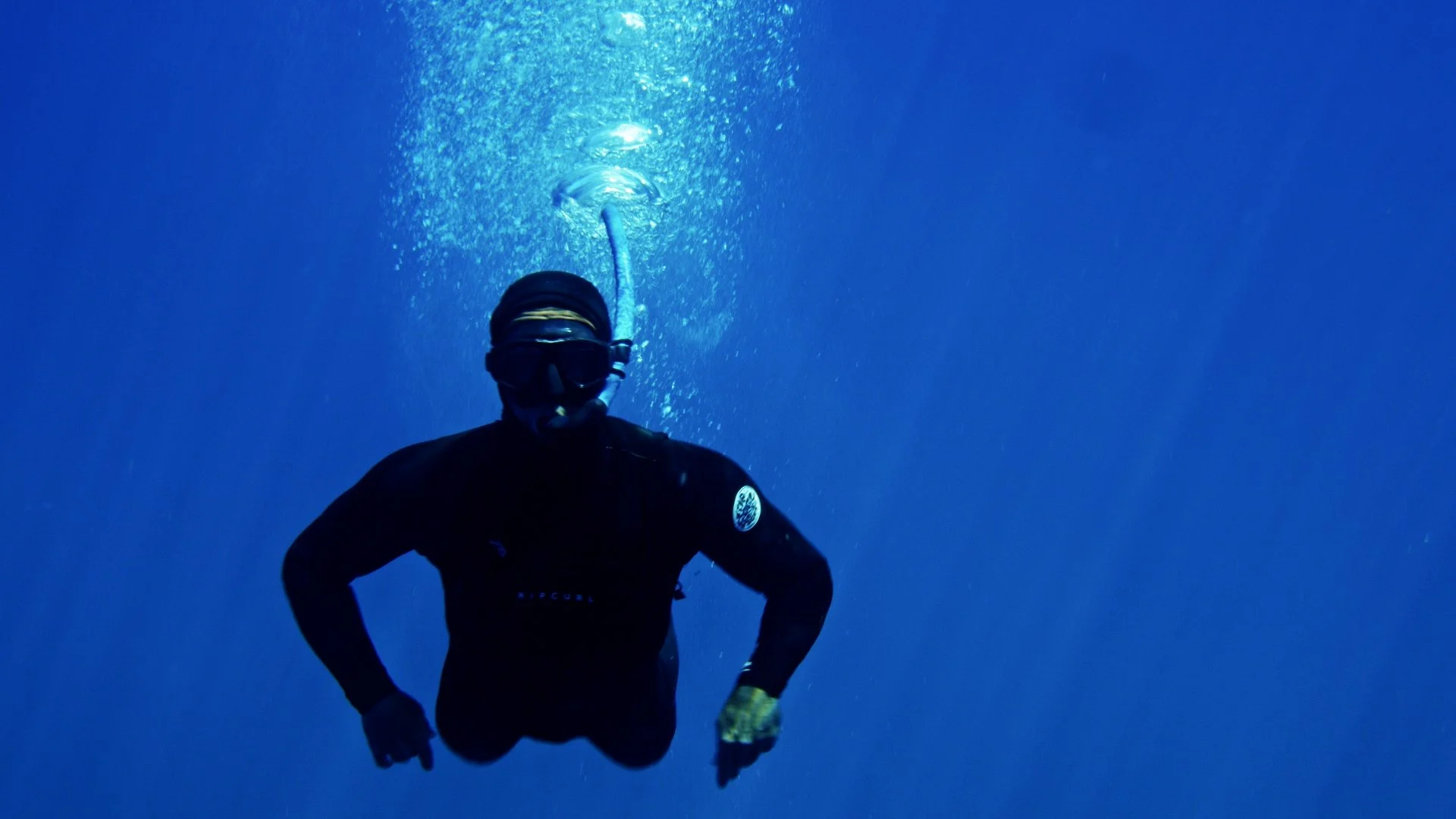
Jesús Salazar (1987) is a Mexican visual storyteller and photographer whose work explores the relationship between ocean, territory, and the communities that live from the sea.
Based in Baja California, his practice moves between documentary photography, environmental research, and long-form storytelling. Through his work he documents coastal cultures, desert landscapes, and the fragile ecosystems of the U.S.–Mexico borderlands, often focusing on the knowledge, labor, and traditions of maritime communities.
Since 2012 he has been documenting the history and culture of Mexican surfing, approaching it not only as a sport but as a cultural and territorial phenomenon. His academic research, developed through a Master’s program in Arid and Coastal Ecosystem Management at the Universidad Autónoma de Baja California, focuses on a Historical Reconstruction of Surfing in Bahía de Todos Santos as a way to inform strategies for the conservation of surf breaks and coastal heritage.
Salazar has collaborated with scientists, conservation organizations, and research institutions across northern Mexico, documenting fieldwork related to climate change, species monitoring, ecosystem resilience, and land management. His work has also followed one of the most significant binational environmental restoration efforts in the region: the historic water deliveries to the Colorado River Delta in collaboration with the The Redford Center and Raise the River alliance.
In recent years his storytelling has expanded into documentary film. He is currently developing Oro Rojo, a documentary film about the lobster fishing communities of the Pacific coast of Baja California and their deep connection to territory, ocean, and collective identity.
Across photography, writing, and film, Salazar’s work seeks to move beyond documentation—using narrative to create memory, reveal overlooked histories, and explore the evolving relationship between people and the landscapes they inhabit.
Clients